%3Aformat(webp)%2Fday_detail%2Fddf30ee3-a607-4188-8760-244ce4ddbd2a-46140552042_d36f30f65e_b.jpg&w=1920&q=75)
Cross Shinkyo Sacred Bridge
The entrance to Nikko's shrines and temples
Information about Cross Shinkyo Sacred Bridge
The Shinkyo Sacred Bridge across the Daiya River belongs to the Futarasan Shrine. This magnificent vermilion-lacquered structure is known as one of the three most beautiful bridges in Japan.
It was once known as Yamasuge-no-Jabashi (Snake Bridge with wild sedges), according to an old legend about the priest Shodo Shonin. It is said that when Shodo and disciples tried to cross the river, they found the current too strong and were unable to cross. They began to pray fervently for a way to cross, and the god Jinja Daio appeared carrying red and blue snakes, which he threw across the river. The snakes intertwined to form a bridge. Thus Shodo and his disciples were able to cross, and the bridge since stood there as the perfect gateway to Nikko.
Interesting facts about Cross Shinkyo Sacred Bridge
The bridge is listed as one of the three most beautiful bridges in Japan along with the Kintaikyo in Iwakuni and the Saruhashi in Yamanashi Prefecture. The bridge is both a nationally designated Important Cultural Property and a UNESCO-designated World Heritage Site.
In the past, the Shinkyo Bridge was closed to the general public and was only open to important military leaders and imperial messengers. However, visitors can now cross it on foot after paying an entrance fee. The bridge serves as the entrance to the main tourist area of central Nikko, and most visitors stop here to take a photo of the bridge, even if they do not pay the entrance fee to cross it.
The best time to visit Nikko and take a picture of Shinkyo Bridge is in autumn with the red and yellow maple leaf landscape.
Pictures of Cross Shinkyo Sacred Bridge
%3Aformat(webp)%2Fday_detail%2Fddf30ee3-a607-4188-8760-244ce4ddbd2a-46140552042_d36f30f65e_b.jpg&w=1920&q=75)
%3Aformat(webp)%2Fimg%2F2048x1536%2F311637.jpg&w=1920&q=75)
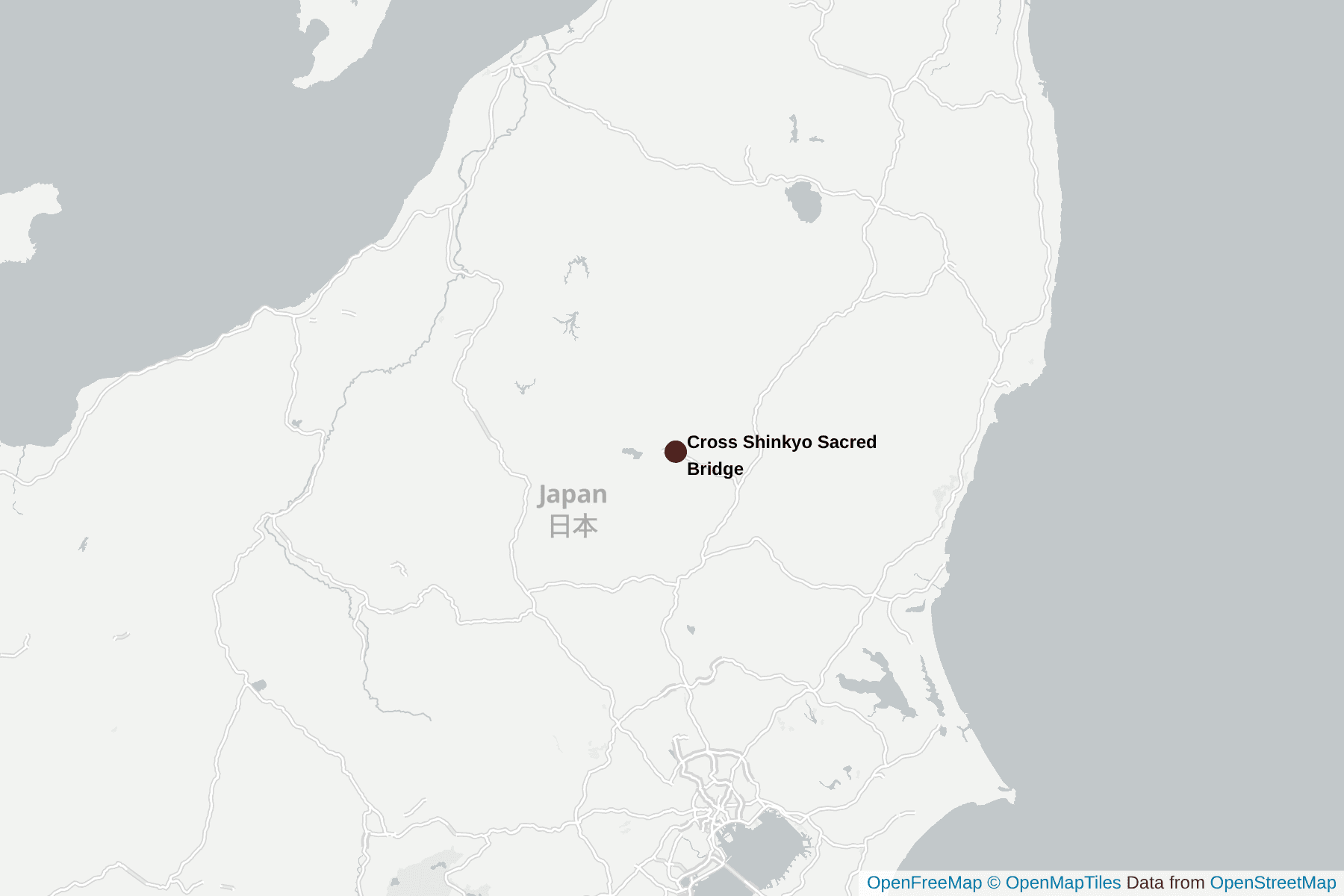
Wo ist Cross Shinkyo Sacred Bridge?
%3Aformat(webp)%2Fimg%2F2048x1536%2F296905.jpg&w=1920&q=75)
%3Aformat(webp)%2Fimg%2F2048x1536%2F296918.jpg&w=1920&q=75)
%3Aformat(webp)%2F7bf2c8ce-c227-46e4-802f-e289b0d25cf1-pexels-tris-truong-792420816-19146696.jpg&w=1920&q=75)