%3Aformat(webp)%2F7bf2c8ce-c227-46e4-802f-e289b0d25cf1-pexels-tris-truong-792420816-19146696.jpg&w=1920&q=75)
Rinnoji Temple and Shōyō-en Garden
Experience the golden Buddha statues and tranquil beauty of the Shōyō-en Garden
Information about Rinnoji Temple & Shōyō-en Garden
The Rinnoji Temple in Nikko is one of the most important religious centers in the city and a UNESCO World Heritage site. Built in 766 by Shodo Shonin, the founder of the Nikko Buddhist school, the temple is famous for its large golden statues of Amida Buddha, Senju Kannon, and Bato Kannon, housed in a serene, sacred space. Right next to the temple is the beautiful Shōyō-en Garden, which, with its traditional Japanese garden architecture and peaceful ponds, offers a place for quiet reflection. The garden provides a harmonious blend of nature and spirituality, leaving a profound impression on visitors.
Interesting facts about Rinnoji Temple & Shōyō-en Garden
Founding: Rinnoji Temple was founded in 766 by Shodo Shonin, a significant Buddhist monk
Golden Buddha Statues: The temple is home to the famous golden statues of Amida Buddha, Senju Kannon, and Bato Kannon
The temple is part of the UNESCO World Heritage site "Buddhist Monuments in Nikko
The adjacent Shōyō-en Garden is known for its peaceful atmosphere, traditional ponds, and seasonal beauty
Rinnoji plays a central role in Nikko Buddhism, which is closely tied to the region’s history and culture
Pictures of Rinnoji Temple & Shōyō-en Garden
%3Aformat(webp)%2Ftravel_report_photo%2F84554%2F6d47a5a0-d404-4969-a4c4-19d3dc184bcc-e4371435-84af-4fdd-a5cc-136bea7b2bec.jpeg&w=1920&q=75)
%3Aformat(webp)%2Ftravel_report_photo%2F84355%2Fde8d6bf9-bc87-402e-b802-e511f7b2db3c-99c83311-e125-44a6-8c34-23d3e8794b63.jpeg&w=1920&q=75)
+2
%3Aformat(webp)%2Ftravel_report_photo%2F84545%2F1322ce6d-1d29-4ec6-9da7-281ced094965-9E484C07-383B-46BD-90C4-3C999AF17FBD.jpg&w=1920&q=75)
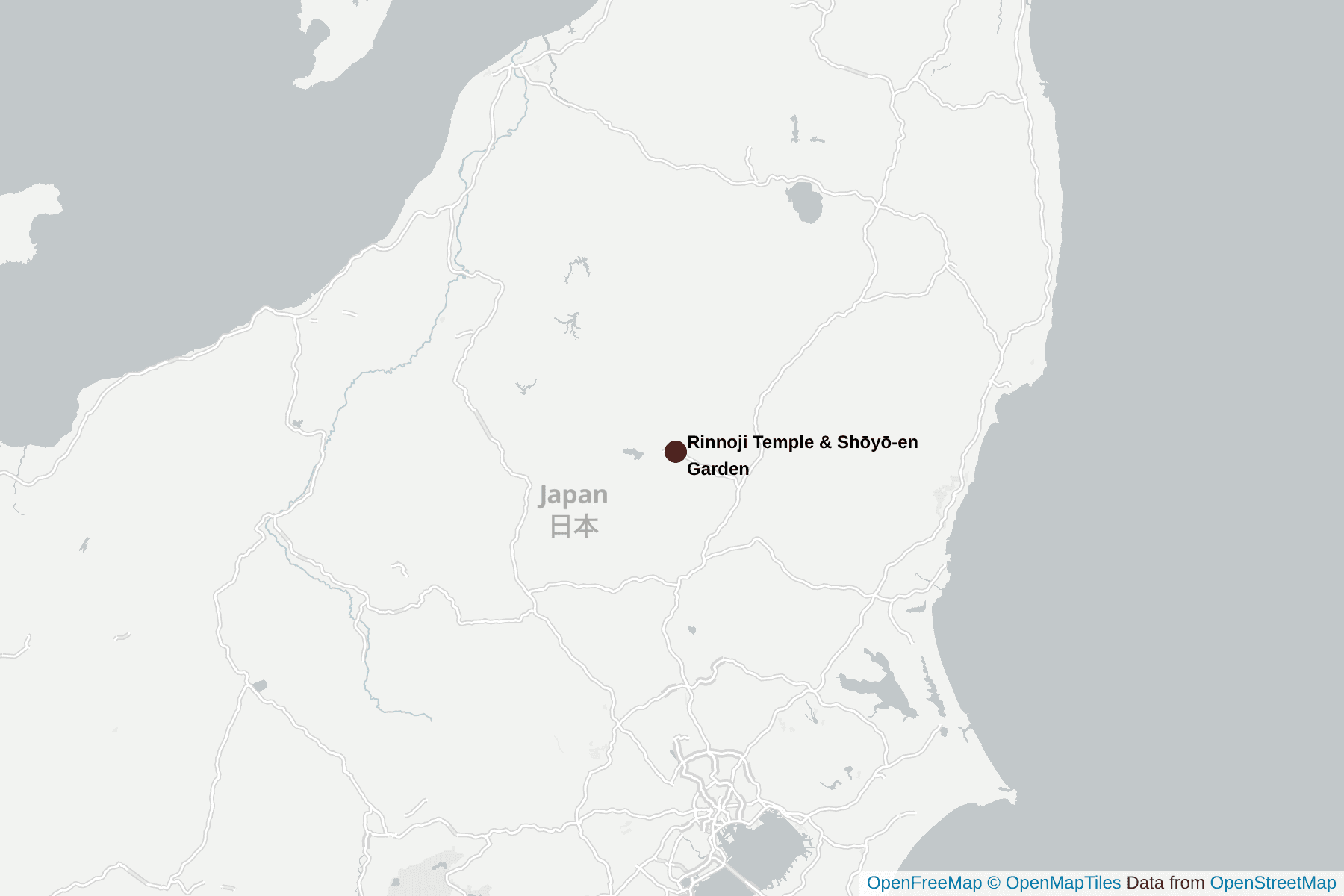
Wo ist Rinnoji Temple & Shōyō-en Garden?
%3Aformat(webp)%2Fday_detail%2Fddf30ee3-a607-4188-8760-244ce4ddbd2a-46140552042_d36f30f65e_b.jpg&w=1920&q=75)
%3Aformat(webp)%2Fimg%2F2048x1536%2F296905.jpg&w=1920&q=75)
%3Aformat(webp)%2Fimg%2F2048x1536%2F296918.jpg&w=1920&q=75)