%3Aformat(webp)%2Ftravel_report_photo%2F82459%2Fe2d80565-0792-4816-8514-67483419aa32-C95D9DF0-7D1C-4C6F-912C-456021CCA8F8.jpg&w=1920&q=75)
Hakata: Gateway to Japan’s Timeless Traditions
Step into the soul of Fukuoka—where serene temples, masterful craftsmanship, and centuries-old gates set the tone for your journey through Japan.
Information about Hakata
Hakata is more than a district—it’s where history breathes and tradition thrives. Begin your exploration by passing through the symbolic Hakata Sennen-no-Mon Gate, a wooden structure built to honor 1,000 years of heritage. Just beyond lies the tranquil Jōtenji Temple, founded in the 13th century and steeped in spiritual calm. This temple is also said to be the birthplace of udon and soba in Japan. A short walk away, the Hakata Traditional Craft and Design Museum invites you into the refined world of Hakata’s artisans, from handwoven Hakata-ori textiles to graceful dolls and ceramics. Hakata’s calm elegance and rich cultural depth offer the perfect prologue to your journey across Japan.
Interesting facts about Hakata
Jōtenji Temple was established in 1242 by the monk Enni Ben’en, who brought back tea culture and noodle-making techniques from China.
Hakata Sennen-no-Mon Gate serves as a symbolic passage to Hakata’s temple district and was built using traditional carpentry methods with local wood.
The Hakata Traditional Craft and Design Museum showcases over 14 types of local crafts, some recognized as Traditional Crafts of Japan.
Hakata-ori, the signature textile of the region, has been produced since the 13th century and was once used for samurai clothing due to its durability and elegance.
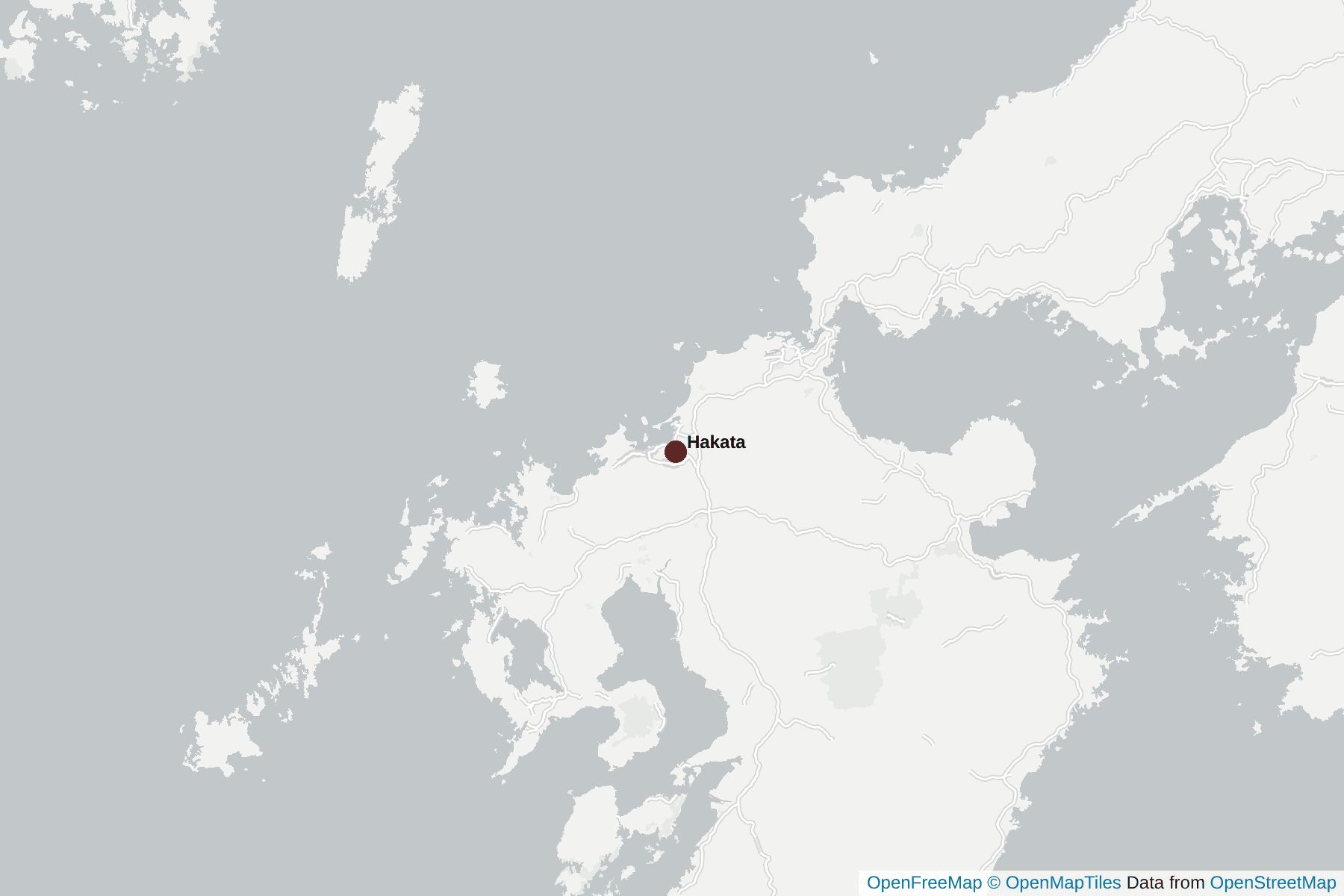
Wo ist Hakata?
Possible Activities in Hakata

City tour
%3Aformat(webp)%2Ftravel_report_photo%2F84482%2F0a0d6d37-b699-4daf-9469-8a7ce8648986-2CAA2256-A32D-48E3-9A09-0DD3F7C2DA31.jpg&w=1920&q=75)